
Consultation across every stage of dialysis
Whether you are being evaluated for dialysis or are already undergoing treatment, specialist consultation can help you understand your kidney reports and treatment path.
- Consultation for patients undergoing haemodialysis or peritoneal dialysis
- Awareness guidance for dialysis access — AV Fistula and Permcath
- SLED and infection-related dialysis support where clinically relevant
- Report clarification and ongoing follow-up planning
Understanding your options
A simple overview to help patients and families understand the common approaches discussed during consultation.
Haemodialysis (HD)
Blood is filtered through a machine using a dialysis access such as an AV fistula or permcath, usually at a dialysis centre.
Peritoneal Dialysis (PD)
The lining of the abdomen is used to filter blood inside the body — an option some patients can perform at home after training.
SLED & Supportive Care
Slow low-efficiency dialysis and infection-related dialysis support may be discussed where clinically relevant.
This page provides general dialysis awareness and consultation guidance. The choice and delivery of dialysis treatment depends on detailed medical evaluation and is carried out at the hospital or dialysis facility.
How haemodialysis cleans your blood
A dialysis machine gently draws blood from your access point, passes it through a filter (the dialyzer) that removes waste and extra fluid, then returns the cleaned blood to your body — all under continuous monitoring.
- 1. Draw — blood flows out through the arterial (red) line
- 2. Filter — the dialyzer removes waste, toxins & excess fluid
- 3. Return — clean blood flows back via the venous (blue) line
Understanding Your Dialysis Access
Two common ways blood is safely accessed for haemodialysis — explained with simple diagrams.
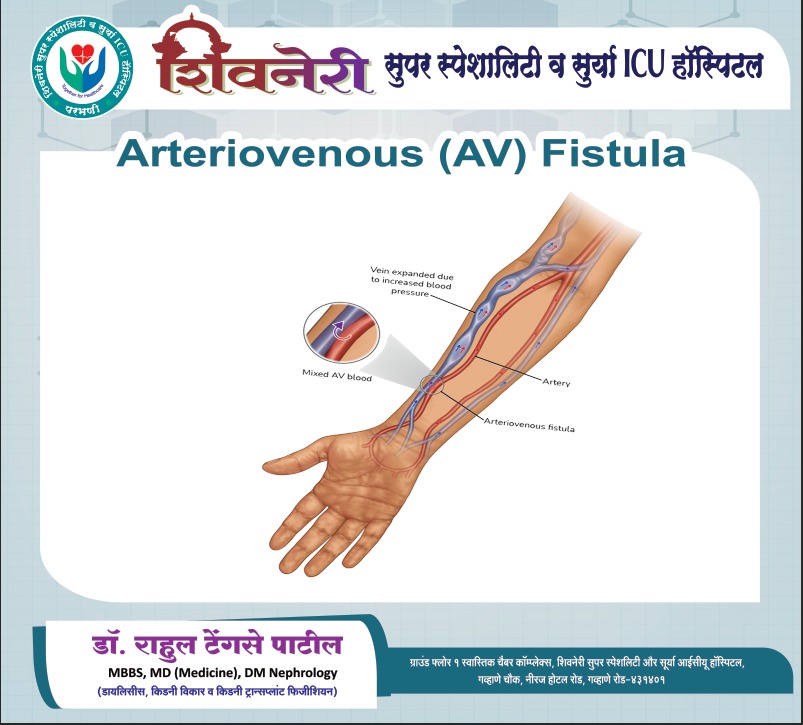
An AV fistula surgically connects an artery to a vein in the arm, strengthening the vein so it can be used repeatedly for dialysis. It is generally the preferred, long-lasting access.
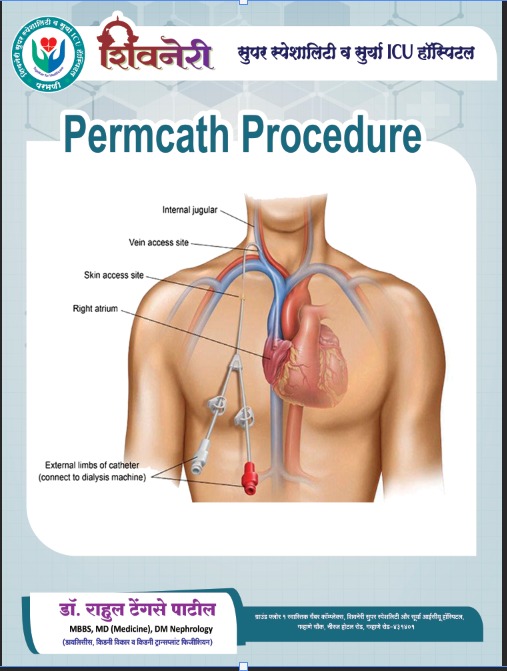
A permcath is a soft tunnelled catheter placed in a large neck vein, with its tip near the heart. It provides dialysis access when a fistula is not yet ready or suitable.
Kidney & Dialysis Facilities at Shivneri
- Modern dialysis machines
- Separate dialysis arrangement for HCV / HBsAg patients
- SLED dialysis & Peritoneal Dialysis (PD) guidance
- Kidney biopsy, Permcath insertion, Plasmapheresis
- Nephrotic syndrome — diagnosis & treatment
- Kidney transplant guidance & snakebite-related kidney care
Care that puts patients at ease
From your first evaluation through ongoing dialysis, the focus is on clear guidance, infection-safe protocols and compassionate follow-up.
- Dedicated arrangements for infection-positive patients
- Guidance on access care and what to expect
Questions about dialysis or your reports?
Book a consultation for clear, supportive guidance tailored to your situation.